 العربية
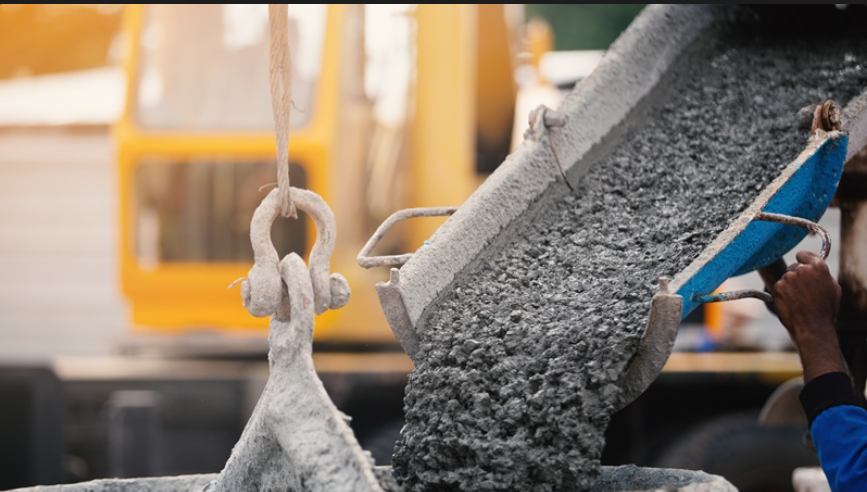 Understanding concrete, its diverse components and ingredients, and its various uses and applications is an important factor that enables project managers to choose the best and most appropriate type of concrete. Concrete is a versatile material that covers a wide range of construction and development purposes. It surrounds us everywhere, from large commercial buildings to roads and streets. Concrete is divided into several types, including ordinary concrete.
In this article, we will discuss ordinary concrete, its features, and the factors surrounding it.
Definition of ordinary concrete and its components
Ordinary concrete is defined as a basic construction material consisting of a homogeneous mixture of cement, water, and aggregate (which includes sand, gravel, or gravel). These components are mixed in measured proportions to produce a solid mass with high mechanical resistance. Concrete is widely used in construction work due to its durability, availability, and ease of shaping. Ordinary concrete is classified as concrete with a compressive strength ranging between 10 and 40 MPa, and is suitable for many uses, such as foundations, walls, and columns in medium-sized buildings.
As for the initial setting time, it typically ranges between approximately 30 and 90 minutes after mixing the ingredients. This time depends on several factors, most notably the type of cement used, the ambient temperature and humidity, and the water-to-cement ratio in the mixture. It is important to pay attention to these factors to ensure the quality and efficiency of ordinary concrete when used on-site.
The History of Ordinary Concrete
The ancient Romans developed a unique type of concrete approximately 7,000 years ago, and traces of their use can still be seen today in many monuments, most notably the famous Pantheon in Rome. Despite this historic achievement, the use of concrete did not witness significant development for a long time, until engineers in the 18th century began experimenting with new cement components to improve their properties.
By the beginning of the 1820s, Portland cement emerged, marking a turning point toward modern concrete, as it was adopted as the basis for most concrete mixes. The mid-nineteenth century saw the introduction of steel as a reinforcing element in concrete, enhancing its strength and durability. This was followed by the development of prestressed concrete at the beginning of the twentieth century, which contributed to the expansion of concrete's use in more complex and durable projects.
Time has moved forward to the present era
Over the past 75 decades, the concrete industry has evolved significantly. Various types of cement have been developed, along with the use of chemical and mineral additives that have improved the physical, mechanical, and chemical properties of concrete, making it possible to customize concrete mixes more precisely to the needs of the project.
Workplace safety is one of the most important foundations for the success of any organization. It protects employees from accidents, ensures continuous productivity, and promotes a healthy and stable work environment. With the growing diversity of work environments and associated risks, it has become essential to adopt effective practices that enhance safety and minimize injuries.
Here are five key practices to improve workplace safety:
1. Promoting a Safety Awareness Culture
Organizations should build a strong culture of safety by providing ongoing training and awareness programs that teach employees how to handle risks effectively. Every worker should understand that safety is a shared responsibility.
2. Using Personal Protective Equipment (PPE)
Helmets, safety glasses, gloves, and protective footwear serve as the first line of defense against injuries. It is vital to ensure these tools are in good condition and suitable for each specific job.
3. Regular Maintenance of Tools and Equipment
Neglecting maintenance is a leading cause of workplace accidents. Scheduling regular inspections and servicing helps ensure that all machinery and tools operate efficiently and safely.
4. Organizing the Work Environment and Minimizing Hazards
A clean, organized workplace reduces the chances of slips and accidents. Clear signage should mark hazardous areas, and materials should be stored safely to avoid unnecessary risks.
5. Encouraging Reporting and Shared Responsibility
Employees should be encouraged to report unsafe conditions or potential hazards without fear of punishment. This proactive approach helps prevent accidents and fosters a culture of accountability.
In conclusion, applying these five practices not only protects lives but also improves productivity and reflects an organization’s commitment to its workforce and sustainability. Safety is not just a rule — it’s a way of life.
Reinforced concrete has become widely used throughout the 20th century, thanks to continuous modifications to its composition. As a result, various types of concrete have emerged, ranging from low- to high-strength, from lightweight to heavy-density, in addition to specialized types adapted to specific environmental and construction conditions.
Today, it is possible to choose the appropriate type of concrete for any construction application, thanks to this continuous development, which has made concrete one of the most widely used and reliable materials in the world of construction.
Advantages of Ordinary Concrete
Ordinary concrete was the beginning before the emergence of many different and diverse types of concrete. Therefore, it possesses features that made its development distinct from other types of concrete. These features include the following:
Availability and Ease of Access
Ordinary concrete consists of basic materials such as cement, aggregate (sand and gravel), and water, all of which are available in most regions of the world. This widespread availability facilitates the acquisition of raw materials without the need to import them from distant regions, reducing logistical costs and supporting the local economy.
Free from defects compared to natural stone
Unlike natural stone, which may contain unseen cracks or defects, concrete is a synthetic material whose quality can be controlled during the manufacturing process. This means the final product is more uniform and consistent, enhancing its reliability in construction applications.
Achieving high strength at an economical cost
Ordinary concrete offers the ability to modify its mechanical properties according to project requirements, such as increasing strength or reducing weight, all without significant costs. By adjusting the proportions of components or adding special materials, the desired strength level can be achieved economically.